Missing teeth can affect not only your confidence but also your ability to eat and speak comfortably. While dental implants are frequently praised for their durability and natural look, many patients feel uncertain about managing the costs associated with them. Fortunately, a wide range of affordable solutions is now available, allowing you to explore different tooth replacement options that align with your needs and budget. For individuals in South Florida, exploring affordable dental implants by Miami-Dade County can help provide access to budget-friendly care.
Each tooth replacement solution presents distinct advantages, durability, and financial implications, necessitating careful evaluation of both immediate and long-term effects on oral health. It is crucial to understand these alternatives to make informed decisions that benefit both aesthetics and budget. Dental experts advise thoroughly exploring each option and seeking professional advice to determine the most appropriate treatment for individual circumstances. Personal requirements vary; while some may find a removable appliance ideal, others might lean towards a more permanent option. Educating oneself on these matters is vital to ensure that the chosen solution aligns with health goals and financial considerations over time.
Removable Partial Dentures
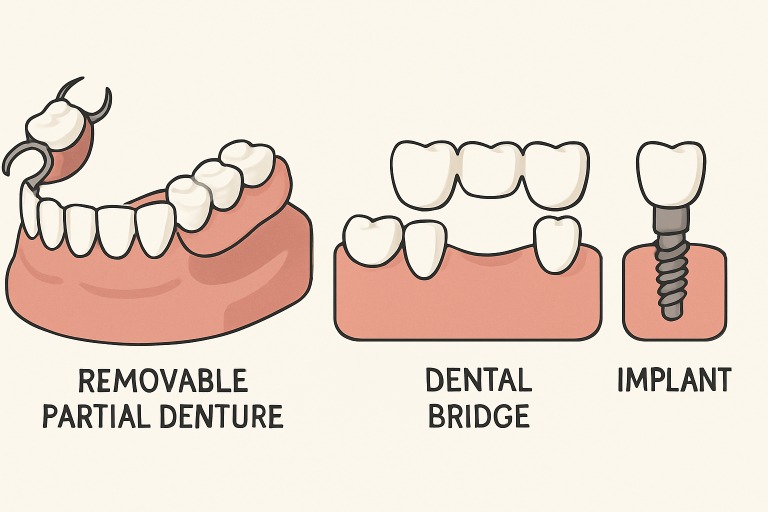
Removable partial dentures are an effective and accessible option for replacing multiple missing teeth. Constructed with a gum-colored base and artificial teeth, they attach to remaining natural teeth, allowing for tooth restoration without the need for invasive surgery. Key benefits include lower upfront costs compared to fixed dentures, a quick and non-invasive fitting process, and the ability to update or repair the dentures as necessary. However, considerations include a potentially less secure fit than permanent solutions, the requirement for regular maintenance and possible relining, as well as experiencing bulkiness or initial discomfort.
Full Dentures
Full dentures are a non-surgical solution for individuals who have lost all upper or lower teeth, enhancing both functional and aesthetic aspects of the face. Advances in materials and design have considerably improved their comfort and appearance. The advantages of full dentures include a lower average cost compared to surgical options, the restoration of basic functions such as chewing and speaking, and the potential for custom coloring to achieve a natural appearance. However, they also present drawbacks, including a tendency to slip without adhesive, the need for periodic adjustments for fit, and generally less stability compared to implant-supported solutions.
Dental Bridges
Dental bridges provide a permanent solution to replace missing teeth by anchoring artificial teeth to neighboring natural teeth or dental implants. This method not only offers enhanced stability compared to removable dentures but also tends to deliver a more natural appearance. Additionally, dental bridges can be installed more rapidly than standalone implants, making them a preferred choice for correcting gaps caused by the loss of 1 to 3 teeth.
However, there are limitations associated with dental bridges. The procedure may require reshaping healthy adjacent teeth to serve as anchors for the bridge. Moreover, they are generally not suitable for addressing larger gaps between teeth. The expected duration of use for dental bridges is typically shorter than that of dental implants, which may affect long-term considerations for patients seeking permanent tooth replacements.
Mini Dental Implants
Mini dental implants are smaller alternatives to traditional implants, offering advantages such as lower costs, less invasive procedures, and faster recovery times, making them suitable for denture stabilization or situations where regular implants may not be feasible. However, they may not be ideal for patients with significant bone loss or strong biting forces, as they tend to be less durable than traditional implants, which limits their use in larger restorative procedures.
Implant-Supported Dentures
Implant-supported dentures offer a combination of affordability and enhanced retention by anchoring into the jaw with a small number of implants. This design yields significantly improved stability and function, ultimately resulting in enhanced chewing power and comfort compared to traditional dentures. Additionally, these dentures contribute to preserving jawbone health and enhance the overall quality of life for users. However, they come with potential limitations, including a higher initial cost than full or partial dentures, the necessity of undergoing implant surgery followed by a healing period, and ongoing maintenance for both the implants and dentures.
All-on-4 Implants
The All-on-4 system is a dental solution that secures a full arch of teeth using four strategically placed implants, providing a fixed and non-removable option for a complete smile. This system provides immediate functional improvement and helps prevent bone loss associated with missing teeth. Its benefits include a natural aesthetic and increased confidence. However, it requires a higher initial investment compared to other options and may not be suitable for everyone, necessitating proper maintenance and oral hygiene.
Financing and Insurance Options
Financing can be a key factor in making dental implants accessible. Dental insurance policies vary in coverage, often focusing on what is considered medically necessary. Options such as Health Savings Accounts (HSAs), dental discount programs, and third-party financing plans can help make treatment feasible for more patients. Consulting with your dental provider about all available payment options can help clarify which option best fits your budget plans.
Conclusion
Whether you choose partial dentures, full dentures, dental bridges, mini implants, or a comprehensive fixed solution like All-on-4, affordable replacement options mean you don’t have to settle for gaps in your smile. Take the time to consult with a qualified dental professional, review your insurance and financing opportunities, and weigh all factors before making a decision. Achieving a confident, healthy smile can be both attainable and affordable when you are equipped with the right information and the right team.