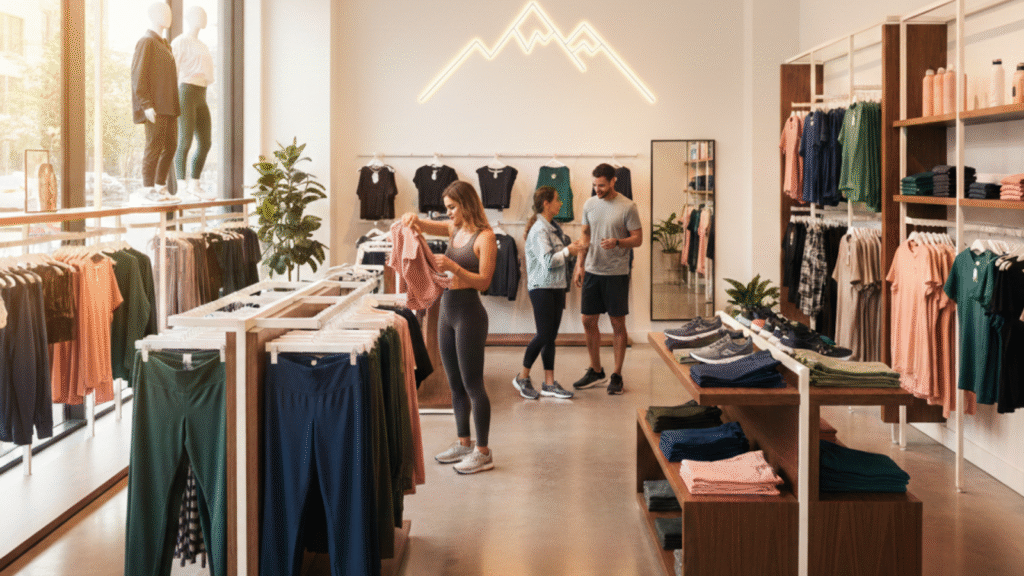
Activewear remains one of the most popular and fast-growing segments in fashion, attracting more and more brands to enter the market. But what should new founders keep in mind when starting in this space? Let’s dive into the key things to consider in the writing below.
Why Activewear Remains a High-Growth Category
The activewear market keeps growing because people no longer wear workout clothes just for the gym. According to Statista, global activewear sales are expected to reach $450 billion by 2026. The reason is simple: athleisure, wearing workout clothes for everyday life has become a cultural norm. In today’s busy world, people value comfort above all, and a high-quality pair of leggings can easily go from the office to a yoga class while still looking stylish.
Another big driver is the rise of new sports communities like Pickleball and Pilates. Grand View Research reports that demand for performance fabrics think 4-way stretch and ultra-moisture-wicking is soaring among younger consumers. Brands today aren’t just selling clothes; they’re selling a healthy lifestyle.
Finally, fabric technology and sustainability are major factors boosting sales. Trends like eco-activewear made from recycled plastics and seamless technology are leading the market in 2026. Consumers are willing to invest in pieces that are durable, eco-friendly, and flattering. By combining street style with technical performance, activewear stays fresh, versatile, and never goes out of fashion.

Common Mistakes New Activewear Brands Make
Launching a new activewear brand can be exciting, but it’s easy to stumble if you don’t fully understand the challenges of production, design, and market positioning. Many new founders make similar mistakes that can slow growth, increase costs, or harm their brand reputation. Here are some of the most common pitfalls to watch out for:
- Ideas that aren’t production-feasible . Many founders fall in love with a design that looks amazing on paper but is extremely difficult or expensive to produce. Activewear must balance performance functionality with aesthetics. Focusing solely on style without considering fabric behavior, pattern construction, or cost-effective production methods can result in samples that never translate well into bulk production.
- Choosing the wrong manufacturer. Selecting a manufacturer based only on cost is a common mistake. Many new brands don’t consider ethical practices or real production capabilities, which can lead to serious issues. For example, there have been cases where factories in China exploited workers or caused environmental damage, leading to public backlash and reputational harm for the brands involved. Beyond price, it is crucial to evaluate certifications, production quality, lead times, and ethical standards.
- Sample vs Bulk Production: Many new brands assume that if a sample looks good, bulk production will automatically be perfect. In reality, issues often appear when scaling up, such as inconsistencies in sizing, color, or fabric behavior.
- Skipping fitting tests and wear trials: New brands assume that if a sample looks good, bulk production will automatically be perfect. Skipping proper fit tests or real-world wear trials can lead to sizing inconsistencies, fabric pilling, stretching, or garments that lose shape and don’t move well with the body. It’s important to wear the garments for multiple days, wash them repeatedly, and simulate real-life use to identify potential issues.
- Lack of a clear Unique Selling Proposition. Without a strong USP, your brand risks blending into a crowded market. Whether it’s pricing, quality, fabric innovation, or sustainability, you need to offer something unique that sets your brand apart. A clear USP helps marketing resonate with customers and builds loyalty in a competitive market.
- Overcomplicating the product line too early: New brands often try to launch with too many styles or categories at once, stretching design and production resources thin. This can lead to inconsistencies in quality and messaging. Starting with a focused, cohesive collection allows brands to refine fit, fabric, and identity before gradually expanding into more lifestyle-oriented items that may eventually involve different production partners, including hoodie manufacturers.

How the Right Manufacturing Partner Supports Brand Foundations
Choosing the right manufacturing partner is more than just finding someone to sew your garments. For performance-driven products like leggings, working with an experienced legging manufacturer is essential to ensure proper stretch, fit accuracy, durability, and consistent quality at scale. A strong partner becomes a foundation for your brand’s growth, guiding you through every step of production, quality control, and scaling. Here are the key ways a reliable manufacturer supports new activewear brands:
- Expert Fabric and Design Consultation. A good manufacturing partner can advise on fabric selection, helping you find the best material if you haven’t decided yet. They also provide insights on design feasibility, garment construction, and trends, ensuring your ideas are practical and wearable. Beyond design, they can guide you on tax policies, import-export regulations, and logistics to streamline operations from the start.
- Bulk Production Guidance and Quality Control. Experienced manufacturers help optimize the transition from sample to bulk production. They establish strict quality control processes to ensure consistency across large orders, which is critical when producing high-volume collections. This minimizes defects, sizing issues, or fabric inconsistencies that could harm your brand reputation.
- Full Package Handling. Some manufacturers offer full-package services, managing everything from sourcing materials to production, packaging, and shipping. While this can cost more than sourcing each element independently, it simplifies your supply chain, reduces coordination errors, and allows you to focus on marketing and brand growth without being bogged down in logistics.
- Customization and Brand Differentiation. There is no one-size-fits-all approach in activewear. A skilled manufacturer can help you customize aspects like pricing tiers, prints, embroidery, labels, and packaging while balancing cost and quality. This flexibility allows you to create products that reflect your brand identity, stand out in the market, and meet the expectations of your target audience without overspending or compromising production efficiency.
- Long-Term Partnership and Growth Support. A reliable manufacturer is more than a service provider, they become a trusted partner for your brand’s journey. Especially for startups, having a partner who believes in their vision, helps solve production challenges, ensures consistent lead times, and works with you to achieve results is invaluable.
In conclusion, building a successful activewear brand requires more than great designs. Understanding production realities, avoiding common pitfalls, defining a clear USP, and partnering with the right manufacturer are key to long-term growth. With careful planning and the right support, new founders can turn ideas into functional, stylish, and sustainable activewear that resonates with today’s consumers.